



Muhammad Ali and Safra Catz built their reputations in very different fields. Ali became a three-time world heavyweight boxing champion and an influential voice on race, religion, and war. Catz rose from investment banking to lead Oracle, one of the world’s largest enterprise technology companies.
No reliable evidence reviewed for this article establishes a family relationship, business partnership, or significant personal connection between them. Their names should therefore be understood as two separate biographical subjects. Their documented stories begin in different countries and follow distinct paths through sports, public life, finance, and technology.
At a Glance
| Detail | Muhammad Ali | Safra Catz |
|---|---|---|
| Name | Muhammad Ali; born Cassius Marcellus Clay Jr. | Safra A. Catz, also identified as Safra Ada Catz |
| Birth | January 17, 1942 | December 1961 |
| Birthplace | Louisville, Kentucky, United States | Holon, Israel |
| Background | African American | Israeli-born American; Jewish family background |
| Known for | Boxing, civil rights advocacy, humanitarian work | Investment banking and Oracle leadership |
| Education | Central High School, Louisville | Wharton undergraduate degree, 1983; Penn law degree, 1986 |
| Major career distinction | Three-time world heavyweight champion | Oracle CEO, 2014–2025 |
| Children | Nine publicly documented children | Two publicly reported sons |
| Status | Died June 3, 2016, aged 74 | Oracle executive vice chair, confirmed in 2026 |
Muhammad Ali’s Childhood in Louisville
Muhammad Ali was born Cassius Marcellus Clay Jr. to Cassius Marcellus Clay Sr. and Odessa Grady Clay. His father painted signs and murals, while his mother helped support and raise the family. His younger brother, originally named Rudolph, later became known as Rahaman Ali.
Ali grew up in segregated Louisville. The racial boundaries surrounding his childhood became important context for his later insistence on dignity, religious identity, and control over his public name.
His introduction to boxing came through a stolen bicycle. In 1954, the 12-year-old reported the theft to Louisville police officer Joe Martin and said he wanted to fight the thief. Martin, who trained young boxers, encouraged him to learn how to box first.
Ali attended Central High School while developing his amateur career. Boxing soon became the center of his ambitions, carrying him from local competitions to the international stage.
Olympic Gold, a World Championship, and a New Name
At the 1960 Rome Olympics, Ali won the light heavyweight gold medal at 18. He turned professional later that year, bringing unusual speed, movement, and confidence to heavyweight boxing.
His personality became part of his appeal. He predicted results, delivered rhyming declarations, and challenged the expectation that a young contender should speak cautiously about established champions.
On February 25, 1964, he defeated Sonny Liston in Miami Beach to win the world heavyweight championship. Liston did not come out for the seventh round, leaving the 22-year-old challenger with boxing’s most prominent title.
Immediately afterward, Ali publicly confirmed his association with the Nation of Islam. He briefly used Cassius X before Elijah Muhammad gave him the name Muhammad Ali.
The change carried religious and personal significance. Ali insisted that journalists, opponents, and officials recognize his chosen identity, making his name part of a wider debate about Black self-determination.
His religious outlook continued to develop. In 1975, he followed the movement toward Sunni Islamic practice associated with Wallace D. Muhammad.
The Draft Case and His Return to Boxing
Ali’s career changed dramatically on April 28, 1967, when he refused induction into the United States armed forces. He cited his religious beliefs and opposition to the Vietnam War.
He was convicted of draft evasion, stripped of championship recognition, and denied boxing licenses. Although he remained free while appealing, he lost more than three years of professional competition during his athletic prime.
During that period, Ali spoke at colleges and public events. His position divided public opinion, but it also established him as an athlete prepared to accept substantial professional consequences for his beliefs.
He returned to the ring against Jerry Quarry in October 1970. In March 1971, Joe Frazier defeated him in their first meeting, handing Ali his first professional loss.
On June 28, 1971, the U.S. Supreme Court unanimously reversed Ali’s draft-evasion conviction. The legal victory resolved the criminal case, although it could not restore the years he had lost.
His most celebrated comeback followed in October 1974. Against the heavily favored George Foreman in Kinshasa, Zaire, now the Democratic Republic of the Congo, Ali absorbed pressure, conserved energy, and stopped Foreman in the eighth round.
The “Rumble in the Jungle” restored his heavyweight championship. The following year, he defeated Frazier in their third meeting, the punishing “Thrilla in Manila.”
After losing to Leon Spinks in February 1978, Ali won their September rematch. He became the first boxer to win the world heavyweight championship three times.
His final years in the ring were less successful. Losses to Larry Holmes in 1980 and Trevor Berbick in 1981 closed his professional career at 56 wins and five defeats.
Ali’s Marriages, Children, and Later Life
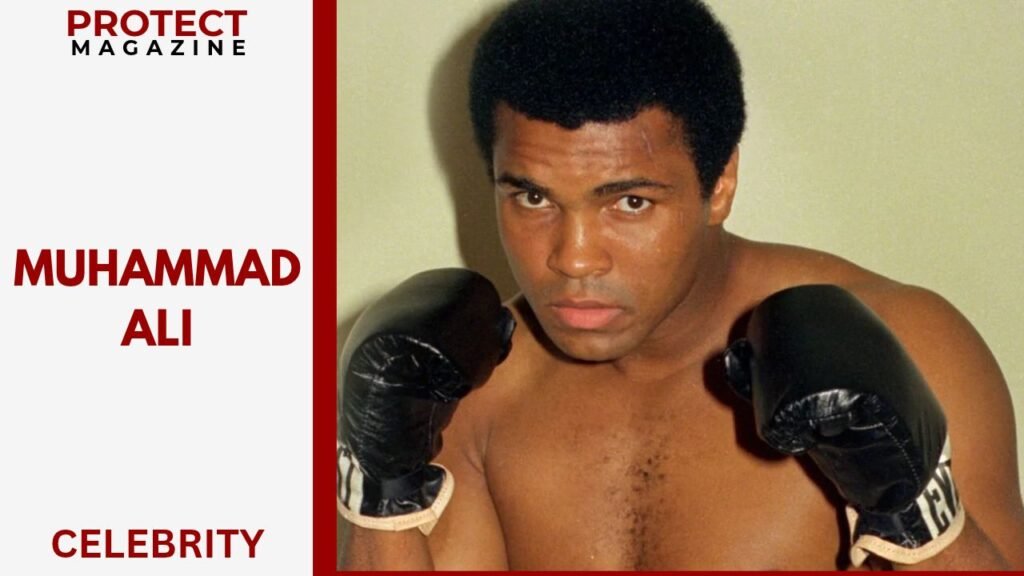
Ali married four times. His first marriage, to Sonji Roi in 1964, ended in divorce in 1966. He married Belinda Boyd, later known as Khalilah Ali, in 1967; their marriage ended in 1977.
He married Veronica Porché in 1977, and they divorced in 1986. Later that year, on November 19, he married Yolanda “Lonnie” Williams. They remained married until his death.
His nine publicly documented children are Maryum, Jamillah, Rasheda, Muhammad Ali Jr., Miya, Khaliah, Hana, Laila, and Asaad. Four were born during his marriage to Khalilah, two during his relationship with Veronica, and two from other relationships. Ali and Lonnie adopted Asaad.
Laila Ali later established her own championship boxing career. Her accomplishments belong to her separate sporting record, although her father’s career remains important family context.
Ali was diagnosed with Parkinson’s disease in 1984. His movement and speech became increasingly affected, but he continued making public appearances and supporting humanitarian causes.
In 1990, he traveled to Iraq and helped secure the release of 15 American hostages. In 1996, he lit the Olympic cauldron in Atlanta, creating one of the most memorable moments of his later life.
He became a United Nations Messenger of Peace in 1998 and received the Presidential Medal of Freedom in 2005. That year also saw the opening of the Muhammad Ali Center in Louisville.
Ali died on June 3, 2016, in Scottsdale, Arizona, aged 74. His funeral and memorial events brought international attention back to the city where his story began.
Read more : Adstotally.com Explained: What Readers Should Know
Safra Catz’s Early Years and Move Into Finance
Safra Catz was born in Holon, Israel, in December 1961. Her family moved to the United States when she was six, and she grew up in Massachusetts.
The Jerusalem Post describes her father as a physicist and her mother as a Holocaust survivor from Romania. These details concern her family background; they should not be confused with her own birthplace or professional experience.
Catz graduated from Brookline High School before attending the University of Pennsylvania. She earned her undergraduate degree from Wharton in 1983 and her law degree from Penn in 1986.
Although she studied law, her career developed in investment banking. She joined Donaldson, Lufkin & Jenrette, where she advanced through senior positions and became a managing director.
That experience gave her a foundation in corporate transactions and financial analysis. In 1999, she moved to Oracle, beginning a relationship with the company that would span several leadership roles and major changes in the software industry.
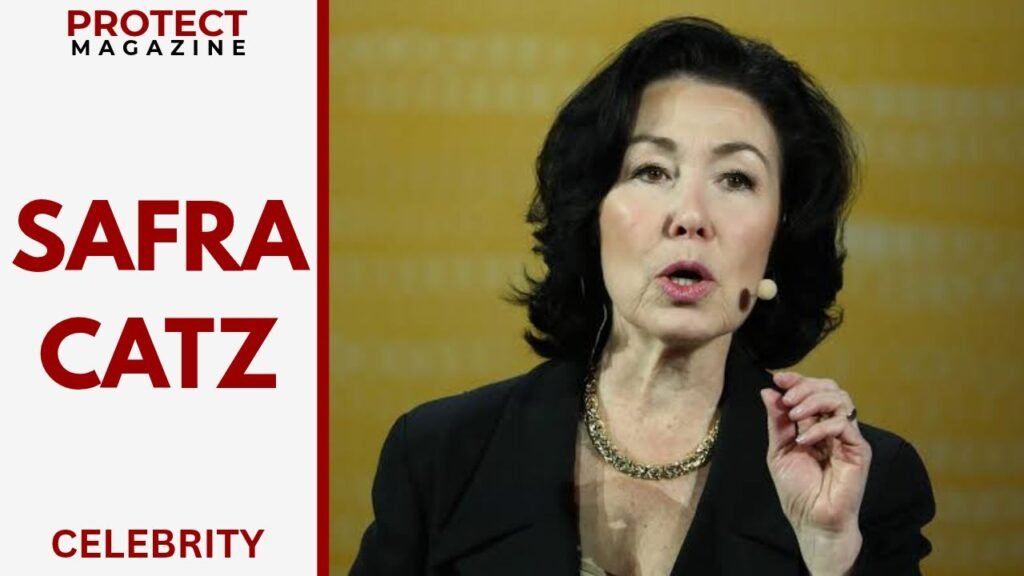
From Oracle Executive to Chief Executive
Catz joined Oracle as a senior vice president in 1999. She became a director in 2001 and president in 2004, later serving multiple periods as chief financial officer.
Her responsibilities extended beyond financial reporting. She became a central participant in Oracle’s acquisition strategy and efforts to operate its international business more efficiently.
A 2008 Penn Law Journal account of her university lecture described the work she and Larry Ellison undertook to centralize Oracle’s operations. It also documented her involvement in the prolonged battle to acquire PeopleSoft.
Oracle completed that acquisition in 2005. The deal strengthened its position in business applications and became a defining example of the consolidation strategy Catz helped execute.
In September 2014, Oracle named Catz and Mark Hurd joint chief executives as Ellison became executive chairman and chief technology officer. After Hurd’s death in 2019, Catz continued as sole CEO.
Her tenure included Oracle’s expansion in cloud computing and further acquisitions. In July 2016, the company announced its agreement to buy NetSuite in a transaction valued at approximately $9.3 billion.
These developments were collective corporate efforts. Catz’s documented importance lies in her executive, financial, and operational responsibilities within that leadership structure.
Catz’s Family, Philanthropy, and Current Role
Catz is married to Gal Tirosh. Public reporting identifies their two sons as Gary and Scott.
Their documented charitable support includes a $1 million commitment announced by Penn Law for the Catz-Tirosh Endowed Fund. The fund supports collaboration between Penn Law and Hebrew University’s law faculty, including academic exchanges and scholarly opportunities.
Catz has also maintained a longstanding role with the Oracle Education Foundation. Oracle’s official biography states that she has served on its board since its founding in 2000 and as chair since 2004.
On September 22, 2025, Oracle appointed Clay Magouyrk and Mike Sicilia as chief executives. Catz moved to executive vice chair of the board, ending her tenure as CEO while continuing in an executive and board position.
Oracle’s 2026 proxy statement confirms that transition. As of November 2026, describing her as Oracle’s current CEO would therefore be inaccurate.
Her official biography also lists a Stanford Graduate School of Business lecturer role, service on In-Q-Tel’s board of trustees, and a Paramount Skydance directorship. Her HSBC and Walt Disney Company directorships are previous appointments.
Is There a Connection Between Muhammad Ali and Safra Catz?
No documented connection between Muhammad Ali and Safra Catz was established in the reliable sources reviewed for this article. There is no verified evidence that they were related, worked together, or shared a business partnership.
Ali was an American boxing champion and humanitarian, while Catz built her career in investment banking and technology leadership at Oracle. Their published biographies describe separate family backgrounds and professional histories.
Their names appearing together in online articles does not establish a relationship. Without a credible record of a meeting, collaboration, or shared project, any claim of a direct connection would be speculation.
Earnings, Wealth, and Their Separate Legacies
Ali earned money through professional boxing and the commercial use of his name and image. A documented 2006 transaction transferred an 80 percent interest in his licensing business to CKX for $50 million, with Ali’s affiliates retaining 20 percent.
That transaction value does not establish his personal net worth at death. A reliable total would require information about assets, liabilities, taxes, and other financial arrangements.
Catz’s financial position is tied to executive compensation and Oracle equity. Oracle’s public filings disclose compensation and ownership information, but those figures serve different purposes: annual compensation, shareholdings, and personal net worth are separate measures.
There is no basis for combining their finances or suggesting shared business interests.
Ali’s life remains closely connected to athletic achievement, religious conviction, and the consequences of public dissent. Catz’s career documents the influence of finance, acquisitions, and executive management on a major technology company. Understanding those distinct histories gives readers more substance than an unsupported connection between their names.
Read more : Tim Dove and Shari Redstone: Their Lives, Careers, and Connection Explained